

A Guide to Single Bunk Beds
Single bunk beds can be a huge space saver for rooms that are crowded in rehabilitation centers and psychiatric units. They also create attractive sleeping nooks, which children love. This makes them perfect for shared accommodations.
This bunk bed is able to be set up in a variety of configurations, including the possibility of a double bed on top and a single bed beneath. Its minimalist silhouette goes well with neutral colours and finishes.
Size
Bunk beds are a fantastic option for kids' rooms. They help to save space and also encourage siblings to spend more time together. But before you invest in one, make sure that it fits in your home and meet other requirements. Also, bunk single bed bunkbedsstore should consider the height of your ceiling. If it's too low, the bunk bed might not be suitable for your space.
Most bunk beds come in a variety of sizes to accommodate various sleepers. A twin over full bunkbed, for example, has a single bed on top and a double mattress with a standard size beneath. This type of bed is ideal for families with children who are at different stages of development. They is easily divided into two beds once the kids are ready to leave.
A futon bunk is another popular type of bunk bed. It is twin-sized mattresses on the upper and a futon lower which can be folded out to create a full-size sleeping area. The futon can be used as a sofa during the day and a bed at night. This bunk bed is ideal for teens and college youth and can be easily converted into two beds once the children are ready to split up.
Many bunk beds feature extra storage space to keep clutter at low. This could be in the form of shelves or drawers underneath the bottom bunk. It's a great way to keep clothes and toys out of sight, and it makes it easy to reach them. It also offers a place to store framed memories or schoolwork.
If you're looking for a bunk bed that has more space, you can select an L-shaped configuration. This layout has a single bunk on the left side and two-seater bunks on the right. This layout is ideal for siblings who want to have their own space but still want to hang out together and play or study.
You can also find bunkbeds with a staircase instead of the ladder. These beds are usually more space-saving, and they have distinctive designs that fit in with any bedroom. Some models have safety rails as well as a customised fun slide near the stairs. This is an excellent choice for children who are just getting started walking. It can also be a safe and easy way to reach and return to the top bunk.
Style
Bunk beds are available in a variety of designs of finishes, designs and configurations. Many are part of complete bedroom furniture collections and come with drawers, shelving and other storage built-in.
Before you buy a bunk bed, check it in person, if you can. If not, use blue painter's adhesive to mark the shape of the bed in the room. Be sure to consider the distance between the bed and fixed elements like closets, windows, and doors. Also, ensure that there's enough space to walk comfortably. Also, take a look at the ceiling's height to ensure that it's high enough to accommodate a single bunk bed, and that the structure doesn't take up too much of the space.
The next step is to choose a traditional full-over-full bunk or a twin-over-twin arrangement. Both types allow children to rest comfortably and save space However, the latter is more flexible for siblings who may need separate rooms in the near future.
If you're unsure what size to buy, search for a model that has a trundle that can be used in a variety of ways underneath the bunk on the bottom. This allows you to add an additional (or fourth) bed in the future, if needed. Some bunks have an trundle that is built into the frame, while others require that you purchase a separate trundle.
Another option is an L-shaped bunk. This arrangement connects two bunks on top into an L shape, leaving plenty of space to place a desk and other toys. It's less popular than traditional bunk beds, but it can be a good option for small spaces.
Think about the method your children use to reach their bunk beds. Some models have straight ladders that are connected to the side of the frame, and others feature angled ladders or stairs. Ladders are most space-efficient while stairs consume more space, but they also provide storage.
Bunk beds don't need special mattresses, but you might want a memory foam, latex or hybrid mattress to enhance your child's comfort as well as support their health. Bunk beds can also have standard twin sheets, which means you'll experience less trouble with laundry than the double bed. If you want to make it more convenient, consider purchasing a set of comforters for bunk beds that are specifically designed to fit bunk beds' dimensions and eliminate the need for tucking.
Safety
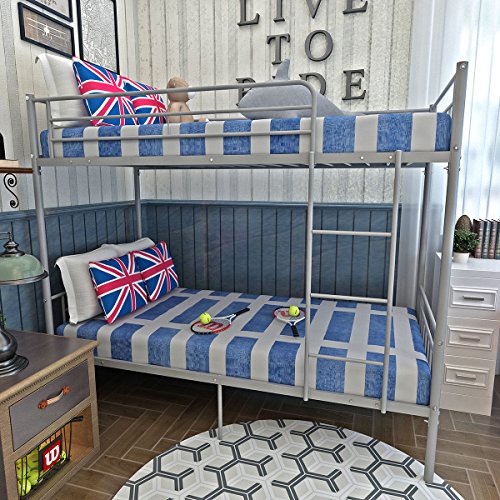
Bunk beds are a popular option for children as they provide more space in a bedroom, but they also pose a number of safety risks if not properly maintained. The following safety tips can help prevent many injuries that are related to bunk beds. These include choosing an appropriate bunk bed frame constructed of durable materials, ensuring the mattress is supported adequately and verifying that the foundations on both sides can support the weight of occupants. It's also important to regularly check the bunk bed for signs of wear and tear. Small problems can be easily fixed by tightening loose screws or replacing damaged parts. A proactive approach to maintenance can minimise accidents and injuries.
To prevent tipping and slipping, it's important to make sure that the ladder is securely attached to its frame. Make sure that children use the stairs or ladder cautiously and to ascend one at a time. It's important to teach them not to stand on the ladder or jump on the bed, since these activities can increase the risk of injury. It's also recommended that the area around the bunk bed is kept free of toys and other items that could be used as climbing surfaces.
It is essential to stop children from hanging clothing and other objects on the lower or upper rails of the guardrails. This could increase the risk for strangulation. This is particularly important with regard to belts and sports equipment, which may become caught in the gaps between the rails of the guard and the mattress, creating dangers of entrapment. It is also essential to stay clear of using the bunk bed for storage for example, putting boxes or other bulky items on top or bottom bunks.
Bunk bed injuries, while uncommon, are usually caused by the way that people especially children use their beds than by any flaws inherent in the design or construction of the bunks. By reviewing the safety features and guidelines and by implementing a few simple precautions families can take pleasure in their new bunk beds with no worry about danger.
Storage
Bunk beds are not just a symbol of versatility and efficiency, but is also a popular choice in healthcare settings. Bunk beds provide more physical wiggle room in smaller spaces, making them ideal for children's bedrooms or shared spaces. Combined with the appropriate storage features, they could even encourage independence in sleeping and play.
Many manufacturers provide unique storage features on their loft beds and bunk beds, making them an ideal option for children's bedroom designs. Look for beds with drawers under the mattress to store linens, clothes and toys. The shelves built into the bunk frame are another great option to store books, decorative items and other bedroom essentials. Some bunks come with a large desk that is perfect for studying or playing board games as well as organizing notebooks and other supplies.
Consider a model that has a trundle that is full-sized on the bottom if you are looking for the maximum flexibility. This allows the lower bunk to be used as a separate twin bed for guests to sleep in when they visit. This is a great choice for children who love sleepovers or siblings.
Cleaning Challenges
Bunk beds pose a challenge for facilities that rely on conventional cleaning and disinfection procedures. They can cause dust and dirt to accumulate in hard-to reach places because they are stacked. Proper training and consistent cleaning procedures can help maintain hygiene standards.
When choosing a single-bed bunk bed, you must think about the size of your bedroom, as well as the needs and preferences of your child. Some bunks have the top bed angled to be closer to the ceiling. This makes it less intimidating for young children. Some bunks are constructed in an arc-like design that could give more space underneath.
Although bunk beds are often found in children's bedrooms however, they are a smart choice for shared spaces in the family or college dormitories. Bunk beds provide children with the independence and freedom of their own bedroom while giving them the safety and comfort of sharing the space with a fellow or sibling.